


DISCLAIMER: I am not a trained SEN educator, psychologist or medical professional. What I am is a very experienced teacher and trainer, and a neuro-diverse person myself. What you will read below describes my personal experience with trainees. Any beliefs, opinions or advice you find below are entirely my own and do not constitute professional guidelines or widely-accepted best practices.
Like most teachers in almost any type of teaching situation have observed, there is an ever-increasing number of neurodiverse learners in our classrooms, apparently many more than there used to be. I myself can say I had at least a couple of them in almost every course I have taught over the past 7 years. I think this can be easily explained if we take into account that:
- diagnosis is much easier nowadays, so younger trainees are more likely to be aware of their neuro-diversity,
- a large number of older trainees have never been diagnosed and are under the impression that they are merely absent-minded or just easily tired.
Admittedly both teachers and trainers are more aware of possible divergent learner needs and quicker to respond to a learner who seems to struggle concentrating on simple tasks or remembering short instructions. This makes trainers more flexible, which is especially necessary taking into account the one-size-fits-all type of training courses that are the norm nowadays.
Flexibility is an obvious answer to the problem of responding to a variety of learner needs, but I will try to make it more specific by referring specifically to teacher training courses, and more specifically to relevant problems that may occur and how I have dealt with them over the years.
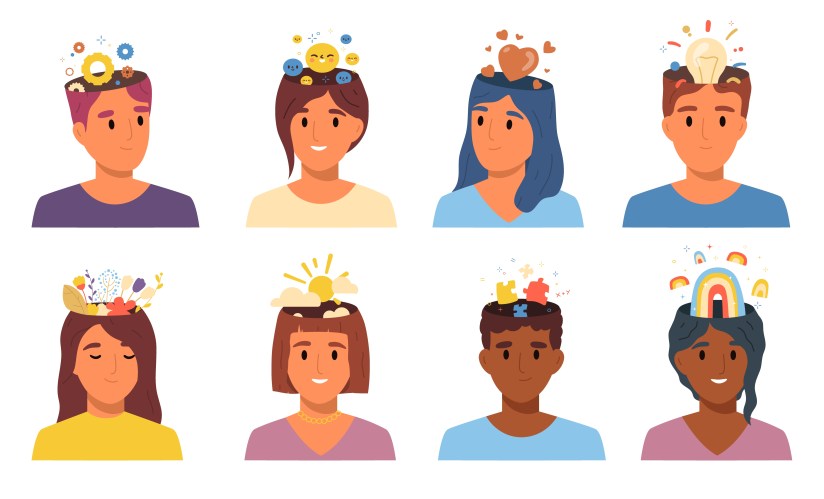
Before I start, let me preface this by saying that the notion of mixed ability classes is not a new one by far, having been discussed in bibliography for decades[1]. So is the concept of multiple intelligences and the need for varying learner preferences to be taken into account.[2] Some of the techniques used to dealing with such learning contexts are very useful when working with neuro-diverse trainees and we do make use of them, e.g., using multimodal input. Below I have added my own suggestions which are of a practical nature and based on practical observations.
Situation 1: You notice that one or more trainees seem to ask for confirmation repeatedly, even if what you have said seems simple and obvious.
What happens:
We are not talking about trainees who are simply insecure, or stressed, or overwhelmed by the massive input some intensive courses entail. We are talking about trainees who you know have comprehended the input and are able to make use of it, as demonstrated by, e.g., their assignment work. Still, they feel the honest need to double-check almost everything, more than once.
How you see it:
Instead of dismissing such trainees as attention seekers or annoying perfectionists, consider whether they might actually doubt their own abilities for comprehension or are under a strong compulsion to ask for confirmation, even of the simplest thing. They may even be aware of the fact that they are becoming disruptive, but they literally cannot help themselves.
Ways to handle it:
Obviously, you will need a lot of patience with such trainees, since their repeated requests for confirmation can disrupt input sessions. You could consider pre-emptive steps, like asking them to repeat points before they ask you for confirmation, clearly numbering the steps involved and recording them on the board.

Example:
- Decide if you want to focus on reading or listening.
- Find a short text that you would like to use from an intermediate coursebook.
- Look at the coursebook activities and decide if you would like to use them.
Alternatively, you could offer a short list of T/F questions that check comprehension of the points you just made.
Finally, consider using more visuals and gestures when making a point, and not relying solely on oral verbal cues. What I have found quite effective is a tri-modal approach: say + do/show/ draw + write.
Example:
SAY: Take notes
DO: Mime writing something down on paper
WRITE: 1. Take notes
All the above techniques may not stop the trainee in question from asking for confirmation completely, but they do have the following advantages:
- They do stop them half of the time.
- They provide some useful recap for the rest of the class.
- They involve the whole class, not just the trainees in question.
- They provide a written record of what you said, which can be copied and referred to, should the need for confirmation arise.
- They deflect focus from the problem itself to the need for clarity of input, which is relevant to every trainee’s needs.
There are a couple more situations I’d like to discuss, but they’ll have to wait for the next blog post, since this one is already quite long.
Please let me know how you handle similar situations yourselves and share your tips in the comment section below.
[1] The Mixed Ability Class by Julia Tice, 1997, Richmond Publishing
[2] Multiple Intelligences in the Classroom 3rd Edition by Thomas Armstrong, 2009, ASGD
Images:
- Wikipedia, CC license, Autistic Art
- Freepik

 teachITefl